Showing posts with label Blacks Camp. Show all posts

Thursday, June 14, 2018

Favorite Fishing Destinations Countdown: No. 5 - Santee Cooper Lakes, South Carolina

Time I've spent on the Santee Cooper Lakes spreads across three decades, going back to college days, and I've enjoyed dozens of memorable days fishing these two big South Carolina lakes. Favorite days, were I to attempt to pick a dozen or so, undoubtedly would include days catching flatheads, largemouths, stripers, blue catfish, crappie and bluegills (at least). Opportunities are diverse at Santee Cooper, and it seems that every kind of fish that lives in these lakes is plentiful and grows big.

For folks from other places, the Santee Cooper Lakes are Lake Marion and Moultrie (locally called the Upper Lake and Lower Lake), which are connected by a canal and impound the Santee and Cooper rivers through some complex engineering. The two lakes are distinctive, and each has its own character, but because they are connected and operated together, they tend to be viewed as a single massive (170,000 acres) fishery.  The lakes are fertile and offer highly diverse forage and extensive habitat, resulting in world-class fisheries for multiple species.

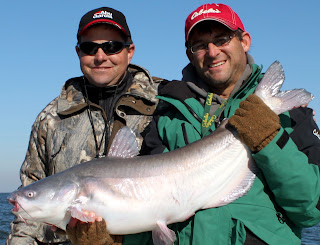
Santee Cooper first gained fame as the original home of landlocked striped bass when anadromous fish got trapped during the lakes' construction in the 1940s and ended up surviving and making spawning runs up the rivers. Big catfish are probably the lakes' current largest claim to fame. Folks travel from all over the country to sample Santee Coopers's legendary catfish, and many guides stay busy year-round with catfish trips. Blues and flatheads draw the headlines, but Santee Cooper holds claim to the world record channel cat, and channels still provide a fun opportunity for fast action at certain times. Santee Cooper is also famous for its giant shellcrackers and bluegills, highlighted by a former world-record shellcracker that came from the canal that connects lakes. And then there are the bass and the crappie, which are the main reasons why many anglers travel to these waters year after year.

Fishing is the main attraction for me, and I could go on and on about Santee Cooper angling opportunities. My fondness for the lakes extends far beyond its fisheries, though. I appreciate the variety of settings, from vast swamps at the upper end of Marion and around both lakes to the flooded forest in Marion's main body to the wide open water of Lake Marion. With that comes diverse wildlife, including gators, ospreys, wading birds and much more.

I also enjoy the atmosphere throughout Santee Cooper Country. These are fishing lakes first, and both are serviced by several true fish camps, where an angler can get a cabin or motel room, buy fresh bait and the tackle needed, hire a guide that goes out of the camp's docks, launch a boat and hang out in the restaurant to enjoy big servings of down-home cooking and hear plenty of fish stories.

I've spent many hours in the Black's Camp restaurant, enjoying catfish stew and a burger or a dinner buffet while gleaning wisdom from veteran guides.

Really, the biggest challenge about planning travel to Santee Cooper is figuring out when you would most like to go, which area you want to visit, and what species you want to target. Santee Cooper Country is a great resource to help with the planning. The website provides loads of great information, and if your plans allow you to travel through the town of Santee between 8:30 and 4:30, stop by their visitor center to look around and talk with someone in person.

#VistSanteeCooper

Monday, November 13, 2017

Sharing Santee Cooper Country


My first Santee Cooper Country adventure was nearly three decades ago with a college buddy, and I remember well my first Santee fish, a bass I caught from near the boat ramp at Santee State Park. That's another story for another time, but it was the start of a major fishing chapter, and one that thankfully continues to be written!

I wouldn't try to guess the number of days I've spent on Lake Marion and Moultrie, which together make up the 170,000-acre Santee Cooper system, but it has been a bunch. I've fished from swampy upper end of Lake Marion to the deep water near the spillway at Lake Moultrie and have spent days catching slab crappie from brushpiles, wrestling flatheads out of submerged timber, drifting for heavyweight blues, pulling bass from cypress knees, slip bobber fishing for giant bluegills and shellcrackers, chasing striper schools and more.

I've also gotten to share Santee Cooper's wonders with my son, Nathaniel (now 19) and a few other friends, and this week I get to do likewise with my 13-year-old son, Asher. We leave dark and early tomorrow for Black's Camp, which is the basecamp where I have spent the most time at Santee Cooper over the years and is one of my favorite destinations anywhere because of the fishing, the food, the fish camp atmosphere and especially the people.

The event officially starts tomorrow at dinnertime, but Asher and I will leave way early so we can have part of the day free to explore fabulous backwater areas in kayaks before kickoff. On Wednesday and Thursday we'll fish with guides, and both weather and the recent bite will dictate species targeted and approaches. I attended the same event a couple of years ago, and schooling stripers and blue catfish served up fabulous action. On Friday morning, we'll venture out in the kayaks one more time before starting toward home.

Of course, between time on the water, we'll enjoy great meals with many fishing industry friends and simply enjoy getting to spend time in Santee Cooper Country.


Monday, November 6, 2017

New Travel Companion

If you happen to see me during upcoming fishing travels, chances are good that I'll be toting extra equipment. My new Old Town Vapor 10 Angler fishing kayak is apt to top my Outback during a lot of future adventures because it will open so many opportunities for fishing and photos.

Weighing in at less than 50 pounds, this boat is easy to tote, and I can comfortably load it solo atop my little wagon. It's also only 10 feet long, which makes it a nice fit on the car and will make it easy to maneuver in tight places.

The new boat will accompany me on the road officially for the first time next week, when I'm Santee Cooper bound to spend a couple of days at Black's Camp. Beyond exploring the margins of Lake Moultrie or Marion, I might spend a little time in the Congaree Swamp. Seeing it atop the car, though (I tied it up there just to see how it would ride) I might not be able to stand waiting till next week! I might have to slide it into some local waters this week. Either way, I'll report back on the inaugural run.

Tuesday, November 17, 2015

My Frist Santee Cooper Cast

With plans to travel to Black's Camp on Lake Moultrie today, I can't help but think about the first cast I ever made into the Santee Cooper Lakes. It was more than a quarter century, but I remember it almost as if it was yesterday.

It was an early spring morning, my second semester in college at the University of South Carolina, and I was with James Helms, a friend from South Carolina who had been building the Santee Cooper legend in my mind since the previous fall, when we met. James had a boat at school, so we'd fished Lake Murray together several times, but this was our the first opportunity we'd found to take a whole Saturday and fish Santee Cooper.

It was right at daybreak, and James had just launched the boat about halfway up Lake Marion (I believe at Santee State Park). While he parked the truck, I cast a Texas-rigged plastic worm into the fabled waters from the riprap bank. About two lifts into my presentation, I felt that telltale "thump, thump," paused a moment and set the hook solidly. A few minutes later I was unhooking a thick-bodied, 2 1/2-pound Santee Cooper largemouth.

If you fish much, you probably can guess the rest of the story. We fished from dark to dark on a perfect spring day, hitting some of the most beautiful bass waters you'll ever see, and didn't get another bite!

Thursday, May 30, 2013

Thursday Tips: Start Small with Bait

"Let's start with small pieces of herring and see if we can get a good bite going," said Kevin Davis of Blacks Camp. "Then, if they start biting well, we'll go a little bigger to see if that gets us a bigger fish."

A multi-species fishing guide and co-owner of Blacks Camp on the Santee Cooper lakes, Davis commonly applies a "start small" strategy whether he's casting lures for bass, dragging cut bait for cats or dangling minnows for crappie. There are exceptions. Occasionally when Davis knows the fish he's targeting are eating big stuff, or he's specifically targeting colossal cats or extra big bass, he'll begin big. Usually, though, Davis finds that he gets more early action by erring on the small size of the bait range for whatever he is doing, and that helps him to locate fish and figure out patterning details that help him present the bigger baits more effectively later in the day and increase his changes of finding big fish for his clients.

Of course, at times he stays small. If there has been a mussel die-off, for example, and the blue cats are all eating little pieces of meat from dying mollusks, it's hard to get even he biggest cat to bite a big piece of cut bait. And while Davis will occasionally drop a big minnow or even a live herring for crappie, he has caught far more serious slabs on small minnows than on bigger baitfish.

Lots of variables come into play, but the short answer from Kevin Davis is that when you're talking about bait, bigger isn't always better.

Friday, May 24, 2013

Santee Cooper Cats & Smoky Mountain Trout

My next two fishing adventures will take me in totally different directions, but neither is terribly far from home. The biggest common denominator, I suppose, is that both are highly favored places for Nathaniel and me to visit.

Come Monday, my truck will be pointed toward Cross, S.C. for a visit to Blacks Camp in the heart of Santee Cooper Country. A family-run fish camp with friendly folks and great Southern cooking, Blacks is located at the mouth of the Diversion Canal, which connects the waters of lakes Marion and Moultrie. And rumor has it that the blue cats are tearing it up in the canal right now.

Cross has a decidedly Lowcountry feel, with moss-draped tupelo trees, huge gators, tea-colored waters and straight rural roads with little along them besides farm houses, country stores and old churches. Beyond its famous catfishing, Santee Cooper is the original home of land-locked striped bass and has produced a couple of former world record shellcrackers. Yet some anglers would reasonably argue that the best fishing is for largemouth bass, crappie or even bluegills. I'm pretty sure we will do some catfishing. Beyond the cats, we'll see what's biting best.

A day and a half after we return from Black Camp, Nathaniel and I will again get in truck, but this time it will be pointed north, and we'll be going uphill instead of downhill. Destination is Townsend, Tenn., just across the Great Smoky Mountains, where the rhododendron should be blooming and the trout should be feeding well.

We're actually headed to Townsend so that Nathaniel can play dulcimer music on the Pickin' Porch at the Wood 'n' Strings Dulcimer Shop on Saturday, June 1. However, we can't go to Townsend without fishing for trout in the cool clear waters that tumble down the steep slopes of the Great Smoky Mountains National Park. Maybe I'm getting ahead of myself, though, and I should focus my fishing thoughts on Santee Cooper for now.

Sunday, June 3, 2012

A Good Truck

My red F150 has served me well, but it looks like it's about time to bid it farewell. In July, when Holly joins our family, we'll officially outgrow out minivan for full-family travel. I plan to trade my truck for an Expedition that is about the same age, but has a whole lot less miles. It will work well for my travels and for the whole family, and the rest of the crew will still fit in the van when I'm not home.

I'll miss having an open bed to throw fishing rods, wet waders or a load of mulch into, and I admittedly just like driving a pick-up. That said, the Expedition, which gets about the same gas mileage as my truck, will serve me a lot better for most travel. Even when it's just Nathaniel and me, if we're fishing and going to a music festival on the same trip, we carry a fair amount of junk, and the extended cab space gets tight. If we tote fishing rods in the back, we have to stow 'em every time we stop long enough at any place where they don't quite seem secure in the back of the truck. And we can't tote anything that can't get wet in the back if there's any threat of rain along the way. All that space will be useful to me in the Expedition.

Another good thing about the Expedition is that both back seats fold all the way flat. That means I'll have just as much open open cargo space as I do now when I need it. It also means that as long as it won't be too terribly hot, I'll have a built-in camper space.
My truck virtually knows the way to favored places like Black's Camp on the Santee Cooper Lakes, Gaston's Resort on the White River and the Walnut Valley Festival. I've tallied about 100,000 miles since 2006, and during that time my truck never seen the inside of a shop, except maintenance necessities like tires, brake pads or fresh oil.

My children also like my truck. Somehow it's always more fun to go places in the truck than the van. Maybe that we'll translate to the Expedition. We'll just have to call it Dad's new truck.

Friday, January 6, 2012

Santee Cats & Crappie

When I finished 2011 with a little largemouth from a pond near home, I sort of wondered what my first fish 0f 2012 would be. Turns out it was a catfish -- specifically a blue catfish -- and it came from Lake Moultrie, better known as "the Lower Lake" by folks in Santee Cooper Country. Nathaniel and I spent a fun day on the lake yesterday with Kevin Davis, owner of Blacks Camp. We split the day in half, catching catfish in the morning and pulling big crappie off deep brushpiles in the afternoon.
The crappie were using brush along the edge of a hump in nearly 30 feet of water. It is cool fishing because from above the surface it looks like you are in the middle of nowhere, but the boat positioning and depth control must be precise. Davis relies on his electronics, marker buoys and trolling motor to keep the boat where it needs to be. He uses two-foot "pulls" of line off the reels to place minnows and jigs at just the right depth, which normally means barely above the bulk of the brush's branches.
Next stop, North Dakota, for walleyes, perch and pike through the ice. That is unless I find myself back on the pond or waist deep in a trout stream some time in the next week or so!